
Nobody Types "Plumber Near Me" Anymore: What Ask Maps Means for Local Service Businesses
A homeowner needs a plumber. A year ago she typed "plumber near me," scanned three businesses in the map pack, and called whichever had the most stars.
This week she opened Google Maps and typed: "I need a plumber who can come out tonight, does water heaters, and won't charge me a fortune for an after-hours call."
Same customer. Same job. Completely different machinery deciding who gets the call.
That's Ask Maps — Google's Gemini-powered conversational layer inside Maps, launched in March 2026 and rolling out across the U.S. And it's not an isolated feature. It's the clearest signal yet that local discovery has moved from ranking to being recommended, and most local service businesses have no idea it happened.
The numbers behind the shift
This isn't a forecast. It already happened.
BrightLocal's 2026 Local Consumer Review Survey found that the share of consumers using AI tools — ChatGPT, Gemini, Google AI Mode — to find local businesses jumped from 6% to 45% in twelve months. Not 45% of tech workers. 45% of ordinary consumers, in one year.
Meanwhile, AI Overviews now appear on as many as 68% of local search queries, according to analysis from ALM Corp, and they frequently sit above the map pack. So before your prospective customer ever sees your listing, they've already read an AI-generated summary that may or may not mention you — and may or may not get your details right.
Two-thirds of your local searches now start with an answer instead of a list. That's the whole story.
What Ask Maps actually does differently
Traditional local search matched a short query to a business category, then sorted by relevance, distance, and prominence. You optimized to rank. The user compared the results themselves.
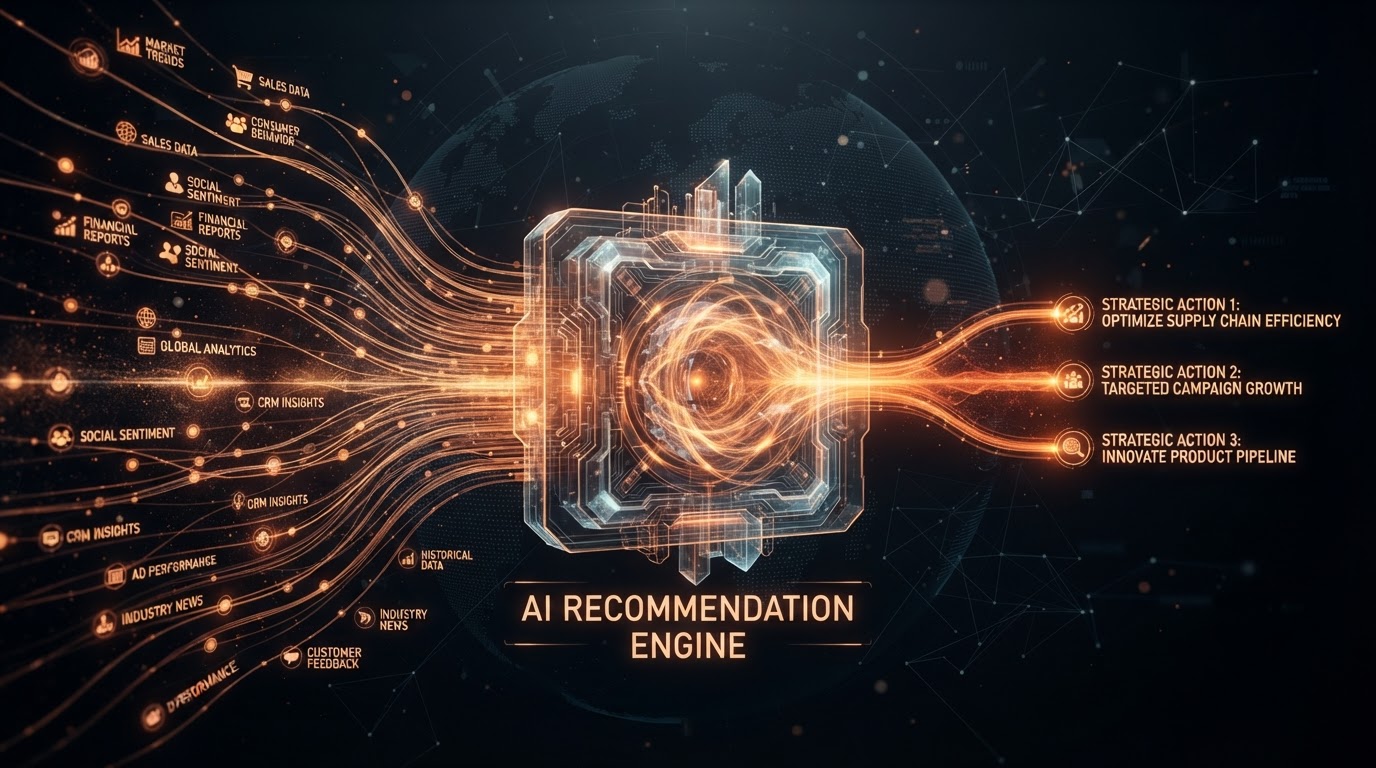
Ask Maps skips that. Gemini reads the messy, multi-condition question — dog-friendly, open past ten, quiet enough for a call, available tonight — and synthesizes an answer from your Business Profile data, your review content, your hours, your attributes, your photos, and your website. Then it recommends.
Three consequences follow, and they're bigger than they look.
One: the three-result ceiling is gone. The classic local pack showed roughly the same three businesses to everyone. Ask Maps can surface many more, because it's matching specificity rather than sorting by prominence. A business that never cracked the top three can win a conversation it fits perfectly. That's the opportunity.
Two: your website matters less at the discovery moment. The AI handles the comparison. By the time someone lands on your site — if they land at all — the decision is often already narrowed. Your data has to do the selling before your site gets the chance.
Three: you can't see what your customers see. Results vary by person, phrasing, and context. There's no rank tracker for a conversation. Local businesses have always dealt with limited control over their Google presence — bad public edits, review spam, sudden suspensions — and this extends that problem into a layer you can't even observe reliably.
Why your old local SEO checklist stopped working
Here's the uncomfortable part. The classic playbook — keyword-stuff the profile description, pile up citations, chase Q&A volume — was built for a matching engine. Ask Maps isn't a matching engine. It's a recommendation engine that needs to feel confident naming you.
BrightLocal's 2026 data reinforces this: reviews rose in weight as a ranking factor compared with 2023, while things like keywords in your profile description and Q&A volume showed little meaningful impact. Being genuinely open at the time of search matters. Filling every field for its own sake does not.
The job changed from "rank higher" to "make sure the AI has an accurate, well-documented picture of this business and can recommend it without hesitation." Those are not the same task, and the second one is mostly about data quality, not tactics.
What actually feeds the recommendation
Based on how these systems currently operate, four things carry the weight for local service businesses.
Consistent business data everywhere. AI models build an internal profile of your business from repeated signals across your site, Google Business Profile, Yelp, Facebook, and the directories. When your GBP phone number doesn't match your website's, that inconsistency reduces the model's confidence in recommending you. This is the single most common problem we find, and the least glamorous to fix.
Machine-readable attributes. Ask Maps matches on lived qualities: emergency availability, financing offered, specific services, service area, accessibility, booking links. If you offer after-hours emergency calls and that fact exists only in your head, you cannot win "who can come out tonight."
Review language — not just review count. This is the one almost nobody is acting on. AI recommendations are synthesized largely from review content, and recent reviews carry more weight than old ones. When Gemini needs a plumber who's good with emergency water heater calls, it looks for reviews that say those words. A five-star review reading "great service, thanks!" contributes almost nothing to a conversational match. A review reading "our water heater failed at 9pm and they had someone here in an hour" is a direct hit on an entire category of queries.
You cannot write those reviews. But you can absolutely ask for them in a way that prompts specificity: "If you have a minute, it helps other homeowners if you mention what we fixed and how fast we got out there." That single change to your review request text is the highest-leverage AI-search move most service businesses can make this quarter.
Freshness and accuracy. Stale hours, an unverified profile, an old service list — a nearby business with incomplete data gets passed over for one that's fully described. Accurate beats optimized now.
What to do in the next 30 days
- Run a consistency audit. Name, address, phone, categories, and service descriptions across your website, GBP, and the major directories. Fix every mismatch. Boring, unglamorous, and the foundation for everything else.
- Rewrite your review request. Ask customers to name the specific service and the outcome. Do this for every completed job. Never offer incentives — that risks your profile, which now takes your visibility with it.
- Document every attribute. Emergency service, hours you actually answer, financing, brands serviced, exact service area, booking link. If it's true, it needs to be stated somewhere machine-readable.
- Write the answers to real questions. Not "HVAC services Tampa" pages — pages that answer what customers actually ask, in the words they actually use, including cost, timing, and process.
- Start monitoring AI answers manually. Ask ChatGPT, Gemini, and Ask Maps the questions your customers would ask. Note whether you appear and whether the details are right. It's crude, but it's more than your competitors are doing.
- Keep your speed-to-lead tight. When AI hands someone a shortlist, they're at the bottom of the funnel with clear intent. The business that answers first still wins the job — the AI just changed who's on the list, not who closes.
The honest assessment
Nobody outside Google knows exactly how Ask Maps selects businesses, and anyone promising you a ranking guarantee inside an AI conversation is selling something. What's observable is the direction: search is becoming a recommendation layer, the interface owns more of the customer journey, and businesses with accurate, richly-described, actively-reviewed profiles are the ones the models can confidently name.
The defensible position hasn't actually changed much — accurate data, real reviews, genuine relevance. What changed is that sloppiness now costs you invisibility instead of just a lower ranking, and the businesses fixing this in 2026 will compound that advantage for years.
The window where this is still a competitive edge is open right now, mostly because your competitors haven't heard of Ask Maps yet.
Want to know how your business shows up in AI search?
We'll audit your profile, your data consistency, your review content, and how AI tools describe you today — then show you exactly what's blocking the recommendation.